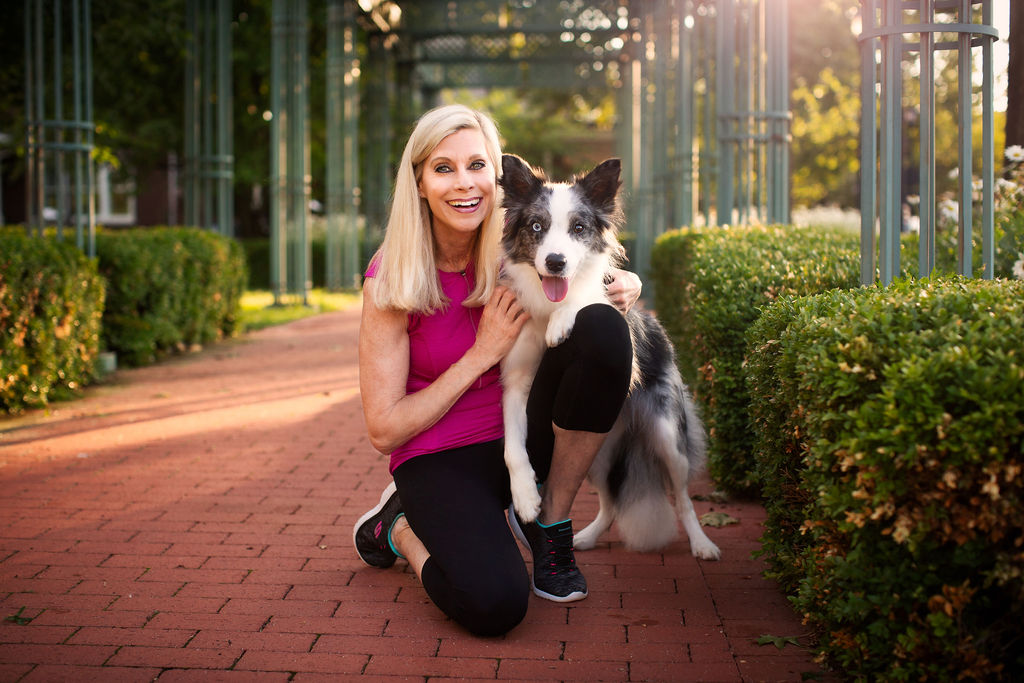
Relaxing Dog Walks

Relaxing Dog Walks
Teaching Dogs to Relax on Leash
Dog owners often seek help from trainers for assistance with leash reactivity. The good news is that it’s a behavior that can be improved with the right application of techniques and support for your dog.
Why do Dogs React on Leash?
There are various reasons why dogs are reactive on leash. Over arousal at the sight of a “trigger” such as a squirrel is one example. Dogs are predators, so it’s natural for them to have an emotional response to prey animals. Another reason for a dog’s leash reactivity might be frustration. When a dog sees a person or another dog at a distance but is restricted by the leash from going to say “hi”, an emotional response might result. Or, dogs that were not properly socialized as a puppy may be overwhelmed when things suddenly pop up in the environment and react out of fear. A herding breed dog may respond emotionally to try to stop movement. There are many reasons why dogs react on leash, but with the proper information and techniques, you can help your dog become more relaxed while out walking on leash.
Set your dog up for success first through management
While you work on helping your dog relax while walking on leash, it’s best to prevent reactivity by avoiding your dog’s triggers as much as possible. Walk during off-peak hours or in less populated areas if you do not have time to work on your dog’s reactivity during a walk. If you know a certain street is busy with your dog’s triggers, take a different path or drive to another location that has less potential for your dog to experience triggers. If a trigger approaches, change your path by crossing the street, turning around, or moving behind a barrier like a car or tree to keep your dog at a safer distance from the trigger.
What type of equipment should you use?
A shorter, non-retractable leash offers better control, preventing your dog from lunging into a reactive state. Longer leashes or long lines offer dogs more opportunities for sniffing. A front-clip harness reduces pulling and offers better control without neck pressure on your dog. A Head Halter such as a Halti, Gentle Leader or Sidekick, effectively redirects a dog’s attention, especially for strong pullers or reactive dogs. Introduce a head halter gradually and positively before you use it on actual walks. Avoid choke chains, prong collars, and e-collars, as they can worsen fear, anxiety, and reactivity in dogs, and could make the dog’s fear and reactivity of the trigger even worse.
If your dog gets overly excited by the leash, avoid walking it when it’s aroused. Focus on calming exercises indoors first. Dogs are sensitive to our emotions – if you feel tense or anxious, your dog may react accordingly. Stay relaxed, breathe deeply, and maintain a loose leash to help manage their behavior.

Sniffing, thresholds, and body language
Observe your dog’s reactions to various triggers. Other dogs, people, bikes, squirrels, cars, or sounds are examples of triggers. Note the distance at which your dog begins to react – this is your dog’s “threshold.” You must keep your dog under threshold to improve it’s ability to handle triggers in the environment.
Learn how to read your dog’s body language so you will know when it’s getting close to its threshold. The dog should be relaxed with a normal body posture and normal breathing while sniffing and exploring the environment. Dogs experience the world primarily through their nose. Sniffing naturally relieves stress in dogs, so let your dog sniff as much as they want as long as it’s safe for them to do so. Actively praise and reward your dog for walking calmly, even without triggers, to reinforce this desired behavior.
Using Counter-Conditioning & Desensitization
Dogs learn by association (classical conditioning) and consequences (operant conditioning). The aim here is to change your dog’s negative associations with triggers into positive associations, using Desensitization and Counter-conditioning (DS/CC). Begin at a distance from the trigger when your dog sees the trigger but does not react. As soon as your dog sees a trigger and before they react, mark the moment with a clicker or a verbal marker like “Yes!” and quickly offer it high-value treats – boiled chicken, hot dogs, or cheese, for example. Food creates a positive association to the trigger. Trigger appears = Yummy treats. Repeat this every time the dog sees a trigger. Over time, your dog should start to look at you for a treat as soon as they see a trigger. Once your dog consistently looks at you for treats when it notices a trigger, gradually decrease the distance to the trigger.
Successful learning happens over time & repetition
You should start to recognize your dog’s early signs of stress – inability to contain its emotions…heavier breathing, elevated body posture, more intense focus in the direction of the trigger. This is the dog getting close to its threshold – do not go any closer to the trigger. If the dog is already in a reactive state, it’s too close to the trigger, you must get farther away for any learning to happen. The dog cannot learn when it is in an emotionally aroused state. It probably can’t even take the treats you offer it in that emotional state. Distance is your friend. If your dog becomes overstimulated, scatter treats in the grass for them to sniff out, which can help reduce their arousal.

Go slowly, literally a foot or two at a time. If your dog reacts, you’ve moved too quickly. Once the dog consistently looks at you when they see a trigger, start teaching cues for simple behaviors like “touch”, “sit” or “lie down” in low-distraction settings. Once mastered, use these cues to redirect your dog’s attention when faced with triggers. Games like “Up/Down,” “1-2-3,” or “Two Steps Treat” can create predictable routines that interrupt a dog’s tendency to react and encourage them to focus on you. Teach these games at home first, then gradually introduce them around distractions, and finally, triggers in the environment.
If you’re struggling, consider working with a certified professional dog trainer or veterinary behaviorist. A professional can assess your dog’s specific situation, identify underlying causes of reactivity such as fear, frustration or overstimulation, and develop a tailored training plan.
Reactivity training takes time and consistent effort. Don’t get discouraged if you have setbacks. Every step forward, no matter how small, is progress. Blending proactive management with positive reinforcement, you can teach your dog to relax and enjoy walks without reacting to everything that pops up in the environment.